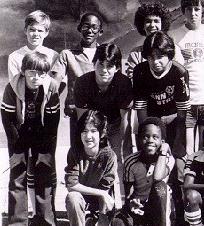
At the age of eleven, I arrived at Clark Air Force Base in August 1979
during one of the rainiest periods I can remember. We flew into Clark
from Travis AFB on a Trans International DC-8, by way of Honolulu and Guam.
My dad was a microwave communications technician with the 1961st Communications
Group and had arrived a month before us.
We landed some time in the afternoon. It was dark and cloudy, and there was
lightning off in the distance as my dad drove us to the NCO Club to get dinner.
The first hour I was at Clark I remember everything looked lush and dark, and
I also had a sense of vastness. It was a good mile or two to the NCO Club.
This was not a typical compact Air Force base.
After dinner my dad took us to an off-base hotel to get settled in. I slept
right away, but woke up sometime in the middle of the night, wide awake from
the time zone shift. I stayed in bed and just listened to the nighttime
noises. In the morning we had breakfast right there at the hotel patio.
The next day we got a temporary home in a trailer park next to the Silver Wing.
I would later find out that these were the trailers used for housing all the
extra pilots and troops ten years previously during the Vietnam War. The days
were gray, gloomy, and rainy, and our trailer had several leaks so we had to
avail ourself of the buckets. Meals were at Kelly Cafeteria near the Silver
Wing, though a couple of times we phoned out for pizzas. My parents were
gone a couple of evenings visiting friends, going to movies, or spending time
at the NCO Club.
Our trailer park existence lasted about two weeks. Later in August our house
was ready: 413 40th Place in the hill housing area. It was a concrete block
house with screen windows, a flat concrete roof, three bedrooms, and a maids
room with its own bathroom. Our furniture arrived almost
right away and we quickly got settled in our new house.
By late August I got digestive upset, probably from
acclimating to the base's passable but unique water quality. From what I heard,
this was fairly common. I slept in the maids room so as to
have quick access to the bathroom, and I recall having 7-up and crackers for a couple of days.
I remember the loud, shrill noise of the cicadas on warm evenings, the gecko lizards that
were found all over outside walls at night, and the "fuck you lizards", better known as
the Tokay gecko, well-known to Vietnam vets for the distinctive call that sounds like
"fuck you, fuck you!"
Pretty quickly we got familiarized with the distant whirring sound down the street
that heralded the arrival of a mosquito spraying truck.
It was a common sound in the late summer and fall at Clark -- you heard them slowly driving along,
spraying a huge cloud of insecticide (malathion?). No one in their
right mind hung around to watch the truck go by.
Around August 27, 1979, I started sixth grade at Lily Hill Middle School.
It was a school of newer design, made up of dozens of 60 x 60 ft modular
buildings subdivided into four classrooms each.
To get there I caught bus #4, which ran through the eastern hill housing area.
It was a good school, and after awhile I became somewhat infamous for
impersonating and drawing caricatures of some of our teachers.
Though we had classes in many different rooms, our class as a whole stayed together.
School always started in our homeroom.
My homeroom was in Room 306, belonging to Art Hamaoka. Here we could
access our lockers, and Mr. Hamaoka made announcements.
Then we went to our classes.
My first class was reading, with the wheelchair-bound Elaine (?) Brown.
Next during the morning was social studies, with the eccentric 65-year old
Mr. G.D. Williams, a devout Yankees fan.
Then I had math with Fred Barber, a reserved, portly, balding man of Greek ancestry.
The next class was P.E. with Mr. Ratts and Ms. Sweeney. I often got out of classes by
"forgetting" to bring shorts.
The next class was English with the flamboyant tennis aficionado Mr. Hunt.
Then there was lunch. We had no cafeteria, though there was a canteen that had
random assortments of popsicles and corn nuts.
Most kids generally ate outside.
I was bored of this and usually ended up drifting into the library, which was air conditioned
and had good books. The librarian, Kathleen Sullivan, didn't approve of people
being in the library without passes, but seemed to recognize that I was not just
having lunch but reading.
Then there was Filipino studies, with Ms. Perez. Most of this was recreating Filipino
crafts like macrame, but we did go on one field trip to Manila to see
a mall and Fort Magsaysay.
Our final class of the day was science with Ms. Disgrazzi. She had curly
hair and a Tab cola. I remember nothing about this class except the neat little
workbooks and an experiment that involved feeding mealworms.
The school was headed by the authoritarian 50-year old bearded principal Dr. Robert Allen.
He was most often seen at the end of school walking among the parked school buses
brandishing a megaphone like Dirty Harry. I actually still have an audio recording of this.
There was assistant principal Robert Weir. He was very personable and had a
cool reputation among the kids. My opinion of him changed one day when I saw the
school was using recycled maps. I figured the school had a giant pile of them and
wanted to get some to study. I was directed to Mr. Weir. But instead of encouraging
my geographical interest, he raised his voice and told me to get out!
One day in September my parents went to an employment office and
hired a maid. Her name was Lilia Mondares, age 19.
I recall that after she got to our house and met everyone, she immediately went
in the kitchen and began cleaning, which a year later I remember imitating in comic form.
Lilia worked Monday through Friday for the entire three years, earning
about $40 per week. She was from San Carlos, about 50 miles north
of Clark, and in 1980 earned the title "Miss Pangasinan" (Miss Province).
We also hired a gardener, called a "yardboy". His name was Mel Quito,
a dark-complexioned family man about 55 years old who lived in Mabalacat.
He would end up coming every Friday during our stay, rain or shine.
There was no shortage of kids to play with. Our neighborhood was full of kids my age.
Next door was Holley Cuddeback, 11. I had no real friendship with her as we usually taunted each other
back and forth, partly my fault as I was wavering between adolescence and "icky girl" phase.
She was affable and intelligent, though, and I think if we were a little older we would have
been best friends. Her sister, Melissa, was 8 and became instant friends with my sister.
The next house over was home of the beret-wearing American-Hispanic Gene Medina, 13,
a riotous, laid back guy who smoked and professed his appreciation of the latest hard rock groups:
Aerosmith, Van Halen, Nazareth, and the list goes on.
The next house had Keith Wages, 12, a good friend of Gene and who also epitomized
hard rock, cigarettes, and rebel attitude. He ironically was involved with the Explorers
police tagalong program but it gave him a lot of adventure stories to talk about.
The next house had only adults, so we shall skip that one.
Then the house further over had the Whitmire girls, who were of senior high school age and
we rarely saw much of them.
The next house had Rhonda Helton, 13; I don't remember much of her except that I enjoyed
her company, though she was a bit older than me.
Then the final house, across from us, had young children: Dawn Roderigues and Jason Roderigues
mothered by the sharp-witted, temperamental single mom Linda Roderigues.
Our circle was a self-contained social network in itself, though us kids often hung out
with Jennifer Page,
Chuck Page, and Bobby Gentle on the next circle over.
Sometimes my friends and I would explore. One spot we liked was the water tank in the
west officer's housing area, the highest spot on the base. A Philippine Air Force
guard was usually on top, brandishing an M-16 rifle and watching for burglars hopping
the fence to loot the lucrative officers quarters.
My friends and I were somehow well-acquainted with the notion of bartering, and we
usually offered a bottle of orange soda in exchange for about 10 minutes of viewing time.
Halloween 1979 was an exciting night. Myself and some friends did impromptu
"big kid" trick-or-treating throughout the neighborhood. Of course, nobody had
to worry about things like tainted candy. After feasting outside in the night air,
we headed to Chuck Page's house and had a party of sorts with music and iced coffee,
then stayed outside talking and roaming around until quite late. We often ended
up at the small playground between Wurtsmith Elementary and the Shoppette.
In January, the classes changed a bit and after lunch came an elective.
I went with typing for the first quarter and
woodworking for the second semester. Typing was taught by Helen Williamson.
Woodworking was taught by Fred Barber and his middle-aged Filipino assistant King.
A redwood lamp that I made there lasted until at least 1989 before the plastic inside broke.
Mike Salas, my good friend and classmate, and myself went into Mr. Barber's empty
math classroom next door to chat and to try out our lamps. Unfortunately Mike
miswired his lamp, and it produced an enormous arc and a black scorch mark going up the
wall. We feigned ignorance and returned to the wood shop.
Sometime in February 1980, I played an amusing prank on Gene and Keith. I explained that
some plants out east of our neighborhood were coca plants. They were amazed and
amassed a plan to acquire a coffee grinder and somehow turn it into cocaine.
We never got a coffee grinder, but excitement was in the air.
But once they figured it out, they got me back. When we were riding the bus, they spotted
an 18-year old tough guy on the street who gave me a sour look. They convinced me that
I offended him somehow, and came to a consensus that this guy was bad news and was
likely putting a contract out on me!
I recall being on edge for a couple of days and rethinking my own mortality, until I realized
how boneheaded the idea is of putting out a contract on an 11-year old.
On March 31, 1980 I became immediately acquainted with earthquakes. A magnitude 6.3
earthquake struck around 8:30 in the evening. I felt being silently shoved around,
and saw my planes hanging on the ceiling were moving around.
Mike and I became friends with black classmate Bill Matthews. His father was a lieutenant
colonel. One time we dropped by his house and he suggested we wait outside, which
interestingly was not the first time at Clark we were encouraged to stay outside a black friend's
house. I was pretty color blind and thought nothing of it, but in retrospect I suppose
in those days there was still awkwardness of some sort with mixed race friendships.
June 1980 arrived and the school went on summer break. I began staying up late at night
and watching late night programming, including Benny Hill and 1960s horror and sci-fi movies.
Eventually I began meeting up with Mike Salas and hanging out with him. We began
recording audio "gag book" productions on tape, weaving out ludicrous impromptu
performances of our teachers. I often went to his house in the evening and he
put on Journey and Van Halen. I have memories of eating microwave burritos at
11 at night, hearing Journey's "Any Way You Want It" and Mike discussing his
latest adventures trying to get with various girls.
One afternoon we met up with a neighborhood girl named Evelyn. We went up in
the attic of Wurtsmith school by climbing up the greenhouse and going into an
access door, and I'll leave it to you to figure out what went on.
At this adolescent age we also somehow figured out that the Stars & Stripes bookstore
threw out their outdated Playboys and Hustlers by the truckload.
I can still smell the musky papery smell of the dumpster and remember carrying 40
pounds of adult magazines up the street.
When we got to the bus stop, we decided to play Santa Claus and pass out issues to the
Filipino men there.
It broke up a gloomy wait into smiles and conversation.
Summer 1980 was a great year, a foray into coming of age, and it's a shame that it went by so quickly.
In late August 1980 I returned to Lily Hill Middle School for seventh grade. This time around
I started the day with Mr. Ratts, who taught health. Most of what I remember
was a lot of 1970s films about marijuana, VD, and amphetamines.
Then there was an occupational class taught by Ms. Sullivan, the librarian.
One week the class put together a short drama that we would videotape, and
the shot involved a classmate walking into the brush at the base of Lily Hill.
Only the guy saw a big snake and ran out. We ran and reran the clip over and over
for a small crowd in the library.
After the occupational class was English, with Ms. ___. I only remember her for having a
jar of Mt. St. Helens ash and giving me some, and for correcting me on how to pronounce "women".
Then I went to art, taught by Mr. Landgren. I remember making a couple of
linoleum prints and
Then had lunch. Most of the time I just remained in the art class, which was
cool as there was lots of room and the more eccentric art types often drifted
into this part of the school. They had lots of Manila city newspapers for plaster
projects, and I avidly read these.
In the afternoon I had science with Mr. Turner, a bearded man who I
recall regularly shaved his legs and occasionally mentioned his Turkish ancestry.
His brand of discipline was making us use the phone in the back of the room
to make the wayward child call his father. The one time I had to do this, I called
the time & temperature number, made conversation with it, and escaped the noose.
Then I had math teacher Dan Lilly who brought his dog Otto
to school every day. Mr. Lilly was a progressively-minded man who started class by
selecting a volunteer to light the incense stick. Needless to say, his classroom smelled
seductively of patchoulli and sandalwood. Mr. Lilly not only taught a crash course in
sex ed one day and showed an uncensored birth film, but he also gave most of us our
first one-on-one experience with a computer, his personal TRS-80.
Gene Medina soon moved away, but myself, Mike, Keith, and Eric became an inseparable
group.
One of our strange explorations was the huge overgrown savanna at the base of
MARS Hill that bisected the western part of the base. We got a strange notion to
become explorers and chart this area, with me producing a map. I can't believe we
actually did this since it was a great habitat for cobras and pit vipers.
It's a wonder we never came away with any ticks, leeches, or bug bites.
My friendship with Mike continued to grow gradually. We occasionally ditched a couple of
classes in the afternoon and walked to the PAF barracks, where Mike would get
cigarettes, or home via the golf course. We often stopped at a golf course
shelter and would spend hours talking. One day, Mike lit up a menthol.
"Tim, you know, I really want to ask Carol Heath out."
"Carol? I know her sister, ___. She's in my class."
"Carol's in my photography class. God, she's so fine, I just want to say something to her, you know."
"What if I said something to ___? Maybe she could set you guys up."
"No, I don't know, that would be kind of weird, I guess."
"How are you going to do it?"
"Well, shit, I don't know. How do you say something like that?"
"I don't know. Couldn't you meet up with her during lunch?"
"I was thinking what if I went up to her house. I could say, you know, hey, you want
to go out for a walk or something?"
"Maybe."
Mike agonized over this for an hour, working through some of his cigarettes, and we
continued on home. Unfortunately I can't recall exactly what came of it.
School continued to be interesting. One annual highlight was the explosive ordinance (EOD)
demonstration. The U.S. fought a battle with Japan 35 years earlier on this base, which meant
lots of hidden unexploded ordinance that kids might find.
To drive home the point, the team would actually detonate various types of small bombs in
a field next to the school!
I'll never forget the eerie powdery explosion of the phosphorus bombs, which did its
damage through burns.
In October, Mike and I learned that the commissary was hosting a "free samples" day.
Mike and I skipped our afternoon classes and headed to the smorgasbord.
The principal, Dr. Allen, saw us when we were halfway there and asked for our names, and
by then I had grown some street smarts and we gave him fake names.
He then told us to go back to school, and once he left, we turned around and continued
to the commissary. I guess those hors d'oeuvres on toothpicks were calling out for us.
Mike and I occasionally stopped in at the snack bar at the 14th fairway, which was close
to home and staffed by Mr. Zapangan. He would often share a cigarette with Mike, we'd
buy a snack, and he'd chat with us about everything under the sun.
November 25, 1980 marked a change in life at Clark when Mike said his goodbyes and boarded
the Flying Tigers 747 for Los Angeles. Myself, Keith, and Ronnie Monroe skipped school
to see him off, and we watched him board the plane. I watched as the plane took off southward,
made a slow left turn, arcing over Mt. Arayat, and then disappeared to the distant
northeast in a bank of cumulus. I knew that Ronnie would be leaving in February, and
Keith in May. Already several kids from the neighborhood were gone: the Whitmires, the
Heltons, the Pages. It was a slow exodus.
The scene was repeated in February 1981 when Ronnie boarded the plane and left, with
Keith and his brother Randy at my side. Then on May 12 Keith boarded the Flying Tigers flight.
I stood alone at the edge of the MAC Terminal ramp. I boarded the orange bus and
headed home.
And it was the beginning of a lonely, depressing summer.
All the neighborhood kids were gone now, except Holley who I didn't have much in common with.
Even Mr. Zapangan at the snack bar, the Mr. Hooper of our area, was gone.
Summer was not very rainy, but it was very gloomy. I did lots of reading, listening
to old tapes and music, and introspection.
Eventually I strengthened my acquaintance with Eric on the next street, and we began
hanging out together and finding things to do.
In late August 1981 I started eighth grade at Wagner Middle School. After the gloomy
summer, it was a welcome change.
My school routine was vastly different this time: instead of sticking with the same
group of classmates all day, each class had a different group of kids. It was
good as I met many more people this way.
What were my classes this time?
First period was health or P.E. at the gym. Health was unmemorable, but for P.E. the
teacher ran our asses off, usually making us run to the golf course clubhouse and back.
I guess it was worth it as I played flag football quite well with the class.
Then we went to social studies, Ms. Johnson who had been
working on her Ph.D. Much of her course covered the civil rights movement.
Third period was art with Ms. Carrasco. I learned a lot from her, and she was very
enthusiastic about trying alternate ways of drawing art like placing the subject upside down.
Then there was English with the graceful Sally Lavin. I recall she was
a good sport about diagramming all sorts of ridiculous sentences we came up with.
One day when there was a substitute teacher, my friend Eric sat in on class with me.
The teacher asked who he was and was unsure of him, but my classmates played along with the ruse.
Then there was lunch, which I often spent near the library.
Math was taught by the enthusiastic math teacher Mr. Reed.
The last class of the day was science with the eccentric Mr. Bryant, a long-haired,
bearded Christian man from Kansas who drove a moped and wore a signature white lab coat.
A girl that I liked, Renee Kasper, was in my science class and after coming home in
the afternoons in September and October I often relaxed outside on the unusually
sunny afternoons, pondered how to ask her out, and enjoyed the fading orange
rays and read books. I also met up with Eric a lot and he introduced me to Dungeons & Dragons.
Around this time the Philippine power companies had energy supply problems and
the base began instituting rolling blackouts, which hit our neighborhood every couple
of nights for two hours. Many a D&D game was played by candlelight and no electricity,
which dramatically added to the experience. Other times we played croquet by flashlight
with his pretty sister Tonya and some other kids in the neighborhood.
By November I made quite a few friends at Wagner Middle: Mike Blair, an
eccentric, tall guy whose dad worked at the U.S. Embassy; goofy, enthusiastic
Chris Partridge; and David Martinson, a clean-cut,
guy whose dad ran the comm squadron.
On November 24, 1981, my math class was interrupted by an announcement that Typhoon
Irma was on the way and that classes for the rest of the day would be cancelled. It turns
out that the hurricane was almost right on us. As I left school, rain and wind began.
Within hours, a rainy windstorm had
taken hold and I watched as some limbs fell. The typhoon was over by midnight, and
as I learned later it went well to our north. There were a lot of downed trees and
limbs, and I still have the pictures.
Every few months there would be word of a huge fight, usually behind Wagner High School.
The rumors would grow during the day and kids would talk of not only martial arts fighting
but of nunchucks, throwing stars, and fights to the death.
The fights often attracted massive crowds of kids but were always broken up before they started.
On some evenings I hung out with Eric, whiling away the hours playing
D & D during a series of rolling blackouts in late 1981. I can't really convey the mystique of
playing D & D by candlelight and with no available electricity.
However I grew bored of the neighborhood and started becoming interested in aviation and
the flightline area.
I began making trips to the flightline occasionally to look at the planes (even the cargo planes),
and I occasionally dropped in at the control tower, base ops, the weather
station, AFRTS, the flight simulator building, and anyplace that had maps
(including CE). Sometimes I was a welcome visitor and other times
I was turned away, depending on who was working at the time.
I also became involved in the Civil Air Patrol and attended from around October 1981 to
March 1982.
The second earthquake hit late at night on May 16, 1982. I was watching a Saturday night movie on
FEN around 1 a.m., lying on my back, and I felt things move around. When I compared notes
at school Monday I found quite a few people who had felt it too.
Eventually it was time to leave Clark.
The summer monsoon arrived, and the same damp, dreary weather that accompanied my arrival
rolled back in, as if closing off a chapter.
On a cloudy morning on July 6, 1982, we boarded a Flying Tigers 747
for the flight home. I happened to catch a glimpse of Christina Hough,
a confident, impulsive, pretty classmate from Wagner Middle.
I was surprised to see her crying from grief, consoled by a sister.
I think many people on the plane were indeed glad to leave and were distracted by
what might be in store in the months ahead, but many of us also realized that it was
a decisive, irreversible end to a life.
Twenty years later I sometimes find myself there in dreams. Not as it was then, but as
it might be now. In the dream I find myself living somewhere near the parade ground with
my current wife, and everything is bright, warm, and in an orange glow, and I find my
spirits stirred by living someplace both exotic and familiar. Of course it's just
a fanciful idea, and the place does not even exist anymore.